herdctl

herdctl
Let Claude Code invoke itself.
Run agents on schedules, chat with them on Discord or Slack, and resume any session in your terminal. herdctl is an open-source orchestration layer that turns Claude Code into autonomous agents.
# Install herdctl globally
npm install -g herdctl

# Initialize your fleet
herdctl init

# Start your fleet
herdctl start
Talk to Your Agents Anywhere
Web, Slack, or Discord — wherever your team already works
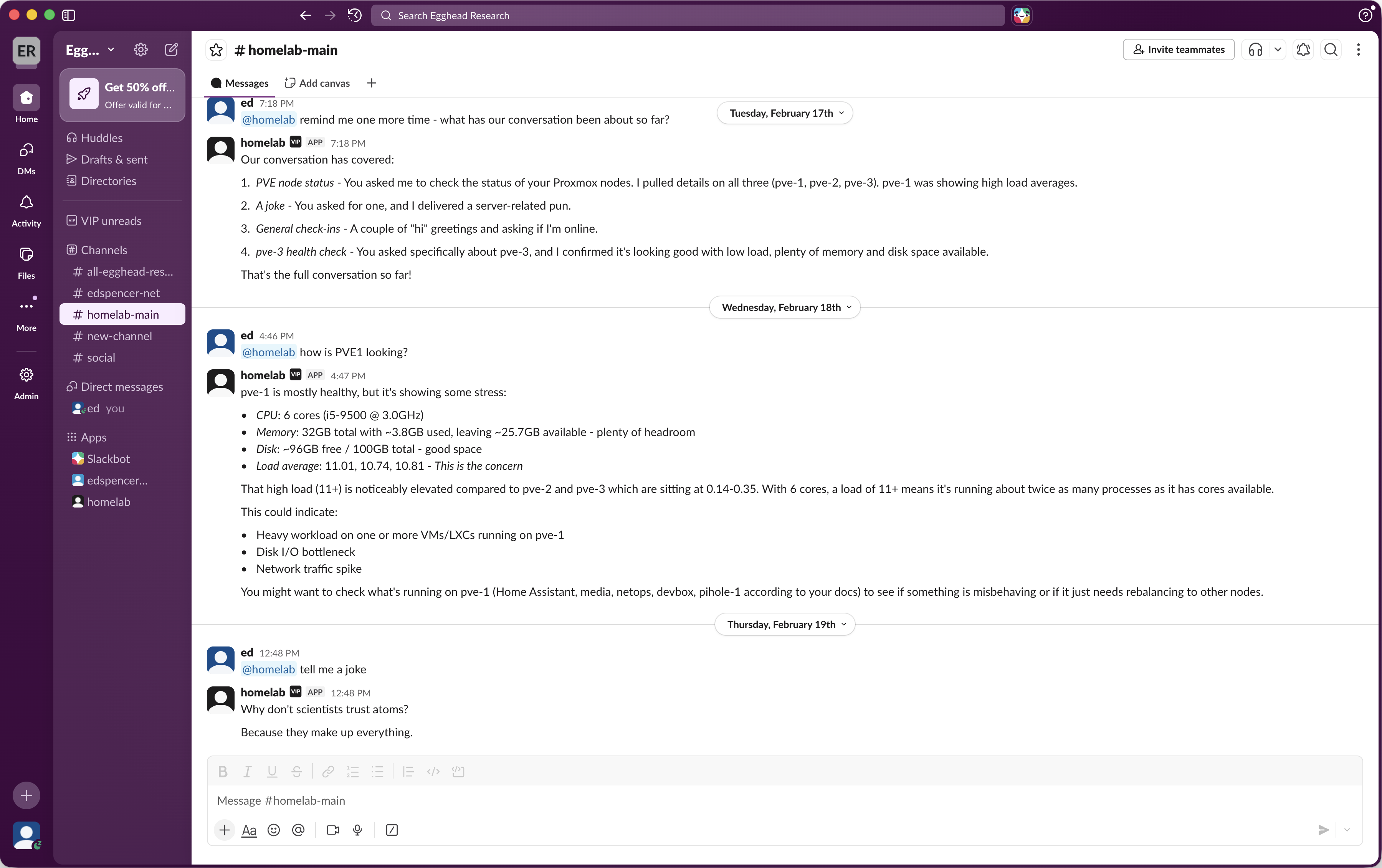
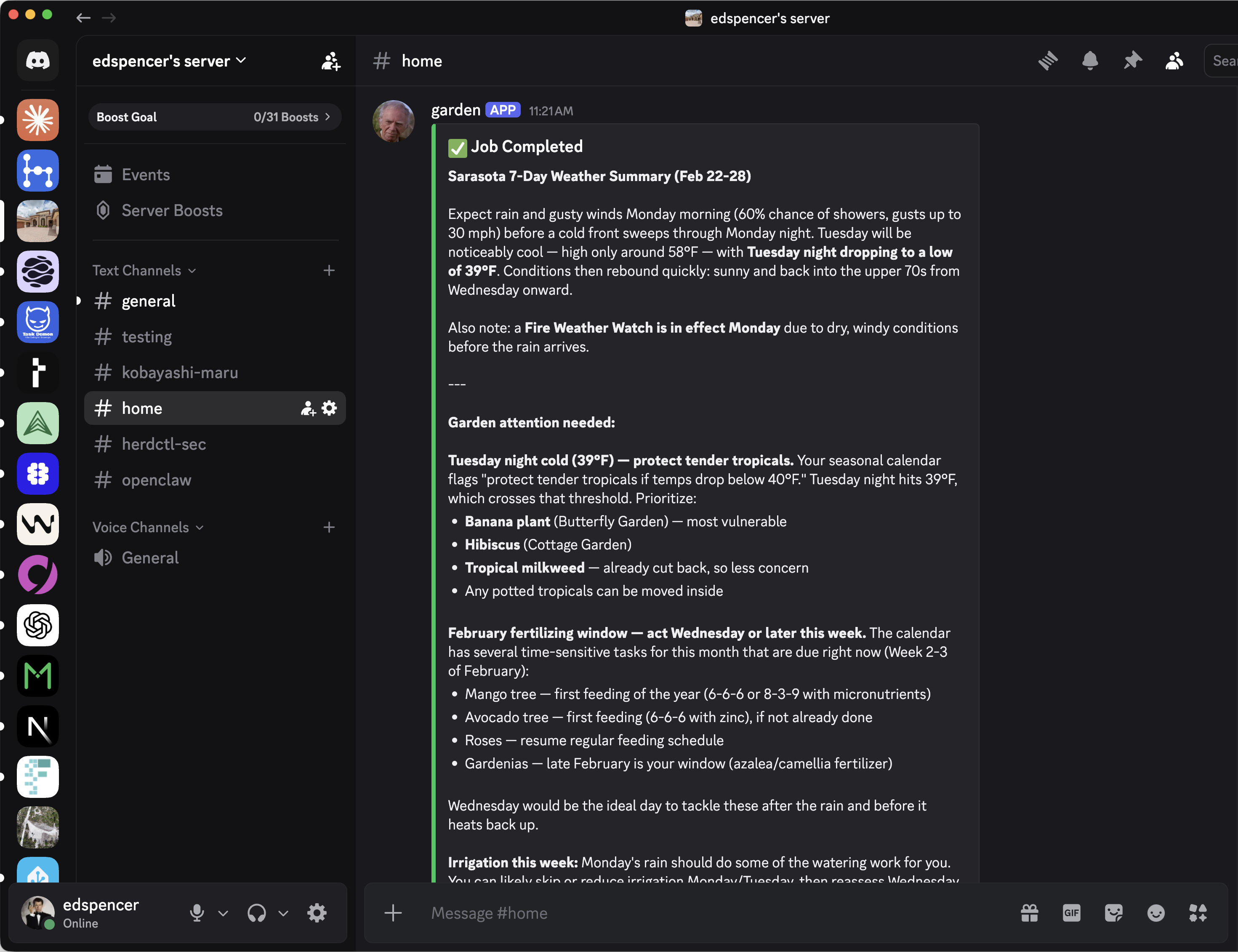
Chat with your agents through the built-in Web UI, Slack, or Discord. Send a message from your phone and pick up the conversation in your terminal. Every interaction is logged and every session is resumable.
Composable Fleets
Scale from one agent to an entire organization
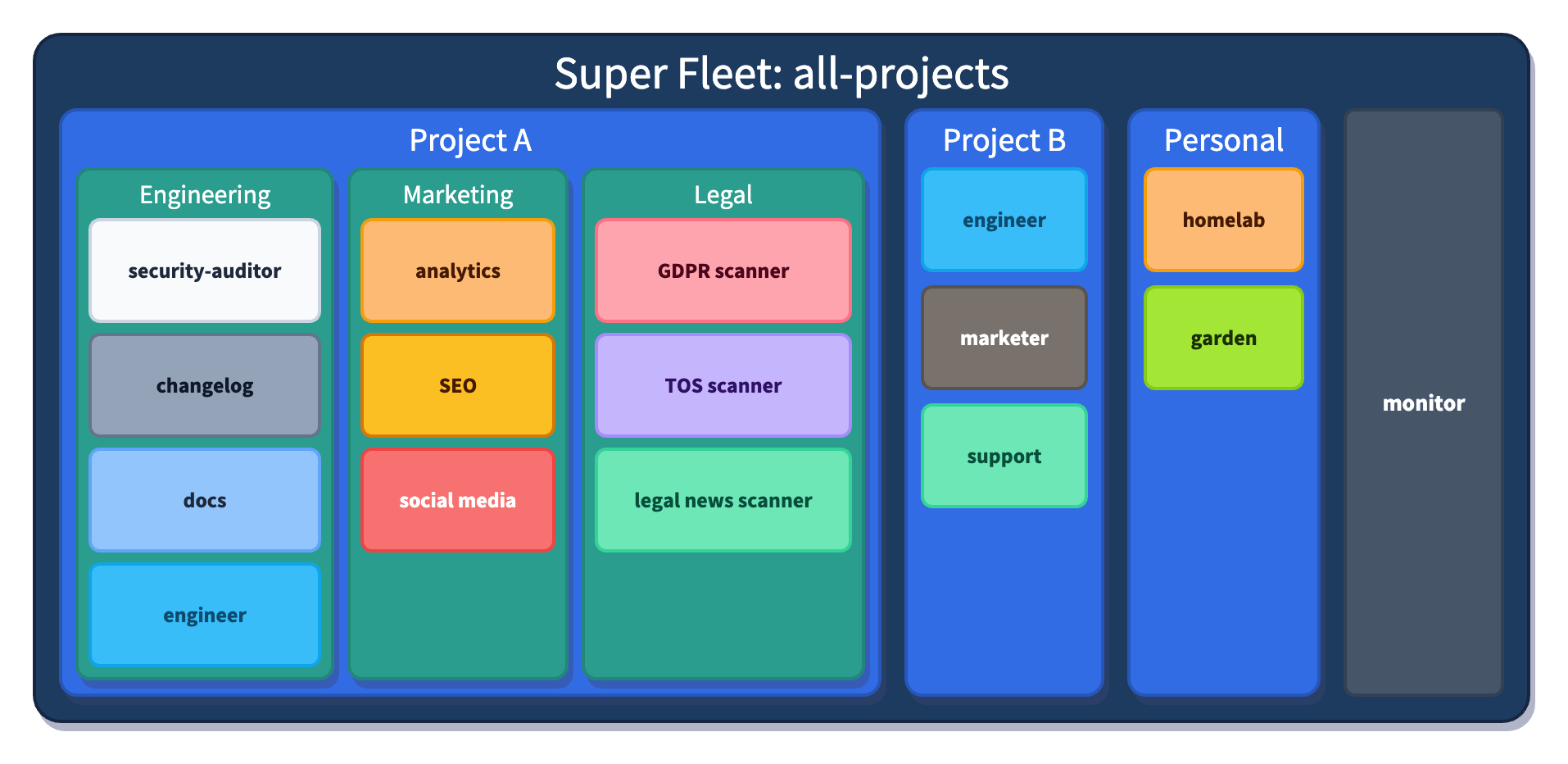
Fleets can contain sub-fleets, so you can organize agents by team, project, or department. A marketing team runs analytics and SEO agents. A legal team runs compliance scanners. A DevOps team runs security audits and infrastructure monitors. Each team owns their fleet — and they all compose into one.
The Big Picture
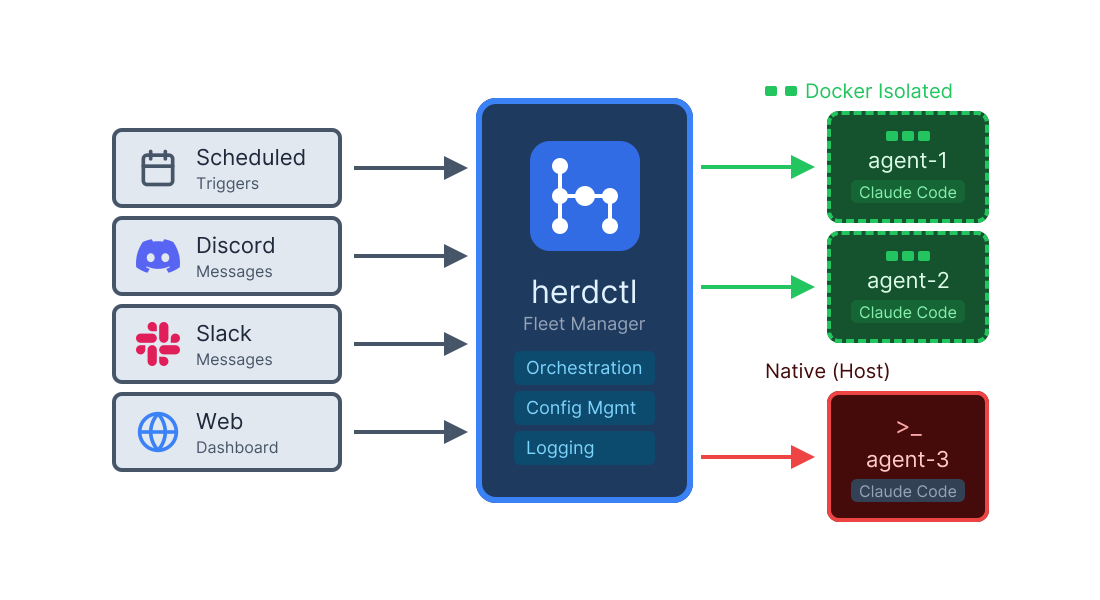
How herdctl works
Simple Configuration
Your fleet in a few YAML files
One herdctl.yaml defines your fleet. Each agent gets its own directory with a herdctl-agent.yaml. Secrets live in .env.
version: 1

fleet:
  name: my-dev-fleet
  description: Development agents

defaults:
  model: sonnet
  max_turns: 50

agents:
  - path: ./agents/pr-reviewer
  - path: ./agents/docs-writer
  - path: ./agents/monitor
    overrides:
      docker:
enabled: trueSecurity First
Run agents in Docker containers
AI agents are inherently risky - they can be manipulated or confused into doing things they shouldn't. Docker isolation is the gold standard for containing that risk, and herdctl makes it dead simple.
- File system isolation - agents can't access your real files
- Network controls - whitelist ports, IPs, and hosts
- Resource limits - prevent runaway processes and fork bombs
- Process isolation - agents can't see your system processes
name: my-agent

# Enable Docker isolation - that's it!
docker:
  enabled: true

# Lock down what tools the agent can use
allowed_tools:
  - Read
  - Glob
  - Grep
  - Edit
  - Write
See it in action
20-minute overview
Watch a complete walkthrough of herdctl's core features: fleet management, scheduled agents, chat integration, and session continuity.
Monitor Everything
Built-in Web Dashboard
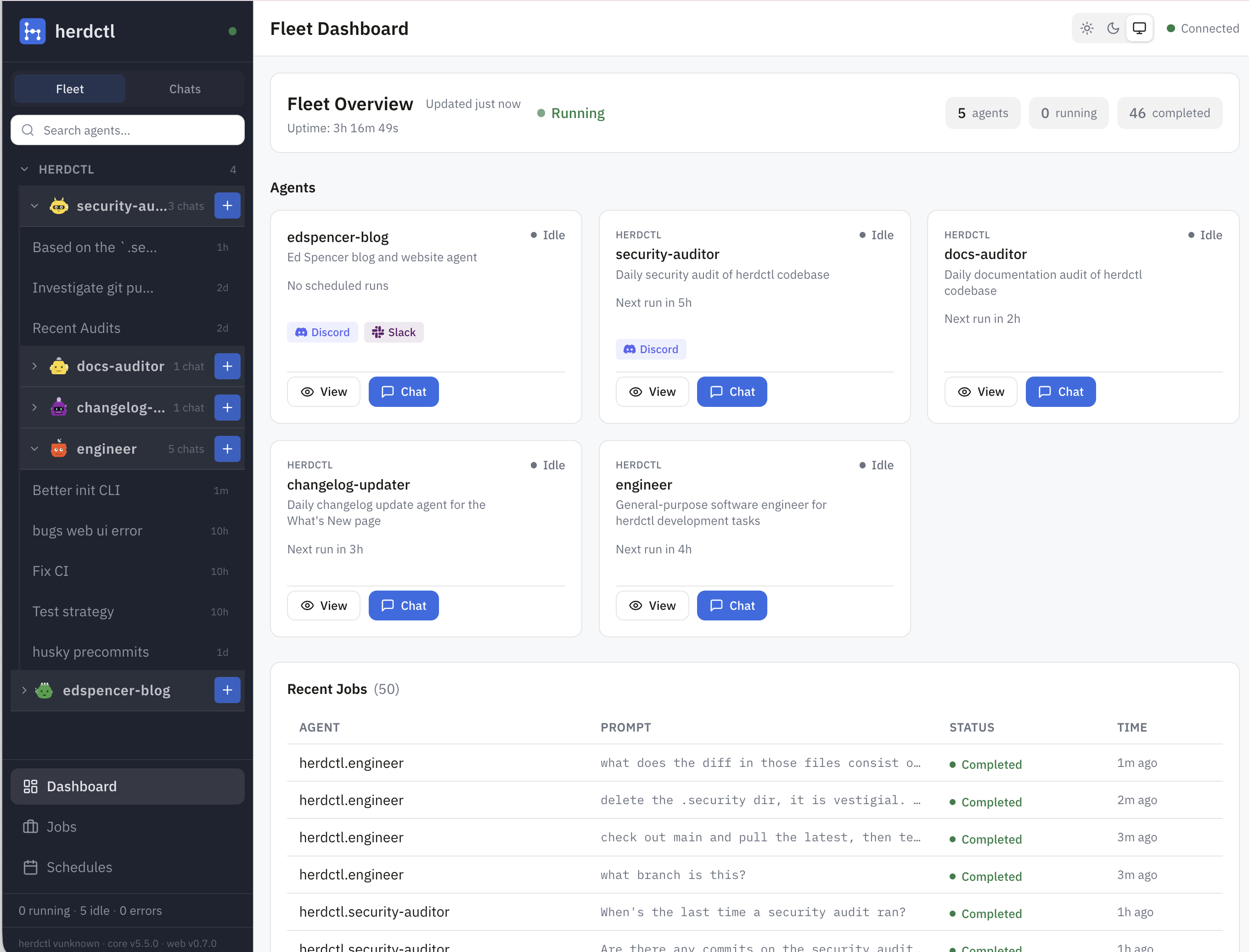
See your entire fleet at a glance. Real-time status updates, live output streaming, and interactive chat - all from your browser. No external services required.
- Live agent output - WebSocket-powered streaming as agents work
- Interactive chat - Message agents directly from the dashboard
- Schedule management - Trigger, enable, and disable schedules
- Job history - Filter, paginate, and inspect past runs
Key Features
- Schedules for Claude Code
-
Define agents that wake themselves up on schedules or triggers. Cron expressions, intervals, or one-off jobs - all from YAML config.
Schedules docs →herdctl-agent.yamlschedules: daily_review: type: cron expression: "0 9 * * *" prompt: | Review all open PRs... - Thin Claude Code Wrapper
-
If Claude Code can do it, your herdctl agent can do it. Same tools, same MCP servers. Lock down permissions per-agent.
Work Sources docs →herdctl-agent.yamlallowed_tools: - Read - Edit - WebSearch - Bash(git) - Bash(ssh) - Connect to Chat
-
Connect agents to Discord or Slack. Message your agents from your phone and they continue working.
Chat integration docs →herdctl-agent.yamlchat: slack: bot_token_env: SLACK_BOT_TOKEN app_token_env: SLACK_APP_TOKEN channels: - "#dev-agents" - Session Continuity
-
Every job creates a real Claude SDK session. Resume that exact session in your terminal with claude --resume. Full context preserved.
Sessions docs →terminal# List recent sessions herdctl sessions # Resume in your terminal claude --resume session-id - Two Runtimes
-
CLI runtime uses your Claude Max subscription (much cheaper). SDK runtime uses API pricing*. Choose per-agent.
Runtime docs →herdctl-agent.yaml# Use Claude Max tokens runtime: cli # Or use Anthropic API runtime: sdk - Hooks & Automation
-
Trigger actions on job completion. Post to Discord, run shell scripts, call webhooks - all configurable per-agent.
Hooks docs →herdctl-agent.yamlhooks: after_run: - type: discord channel_id: "${CHANNEL}" when: 'job.scheduleName'
Proactive Alerts
Agents come to you
Agents don't just wait to be checked on. Configure hooks to post results to Discord or Slack after every run. Get security findings, build failures, or daily summaries delivered straight to your team's channels.
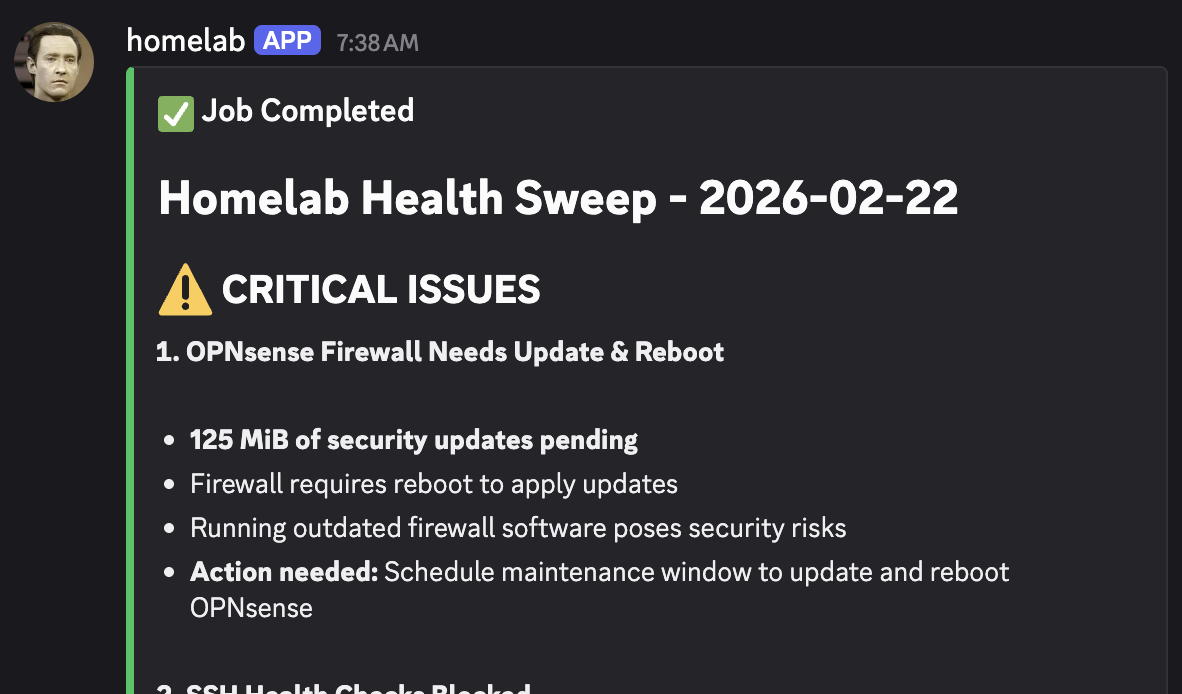
A homelab agent reports security findings to Discord every morning
Use Cases
What can you build with herdctl?
Any task that's repetitive, time-sensitive, or benefits from continuous monitoring is a candidate for automation.
Every team gets their own fleet
Learn about fleet composition →
Marketing
- Analytics dashboards
- SEO monitoring
- Sentiment analysis
- Competitor tracking
Legal & Compliance
- GDPR scanner
- Terms of Service monitor
- License auditor
- Legal news alerts
DevOps
- Security audits
- Infrastructure monitoring
- Dependency updates
- Incident response
Example agents
PR Review Bot
Review all open PRs every morning at 9am. Leave thoughtful comments, suggest improvements, flag security issues. Trigger via Slack or Discord: 'Hey, can you review PR #47?'
Software Developer Agent
Point an agent at your codebase - it honors your CLAUDE.md, uses your slash commands, connects to your MCP servers. Chat with it on Slack or Discord from your phone.
Documentation Agent
Scan your codebase weekly for undocumented functions. Generate JSDoc comments, update README files, create examples. Review its own output before committing.
Continuous Security Audit
Daily scans for vulnerabilities, misconfigurations, and exposed secrets. Findings get reported to Discord. Run it long enough and it catches things humans miss.
Competitive Analysis
Daily scans of competitor websites, pricing pages, and feature announcements. Get notified when something changes. Weekly summary reports to your team.
Community Intelligence
Monitor Reddit, Hacker News, Twitter for mentions of your product. Surface questions, complaints, and feature requests. Draft responses automatically.
From the Blog
Latest herdctl articles
Deep dives, tutorials, and announcements about herdctl and autonomous agent fleets.
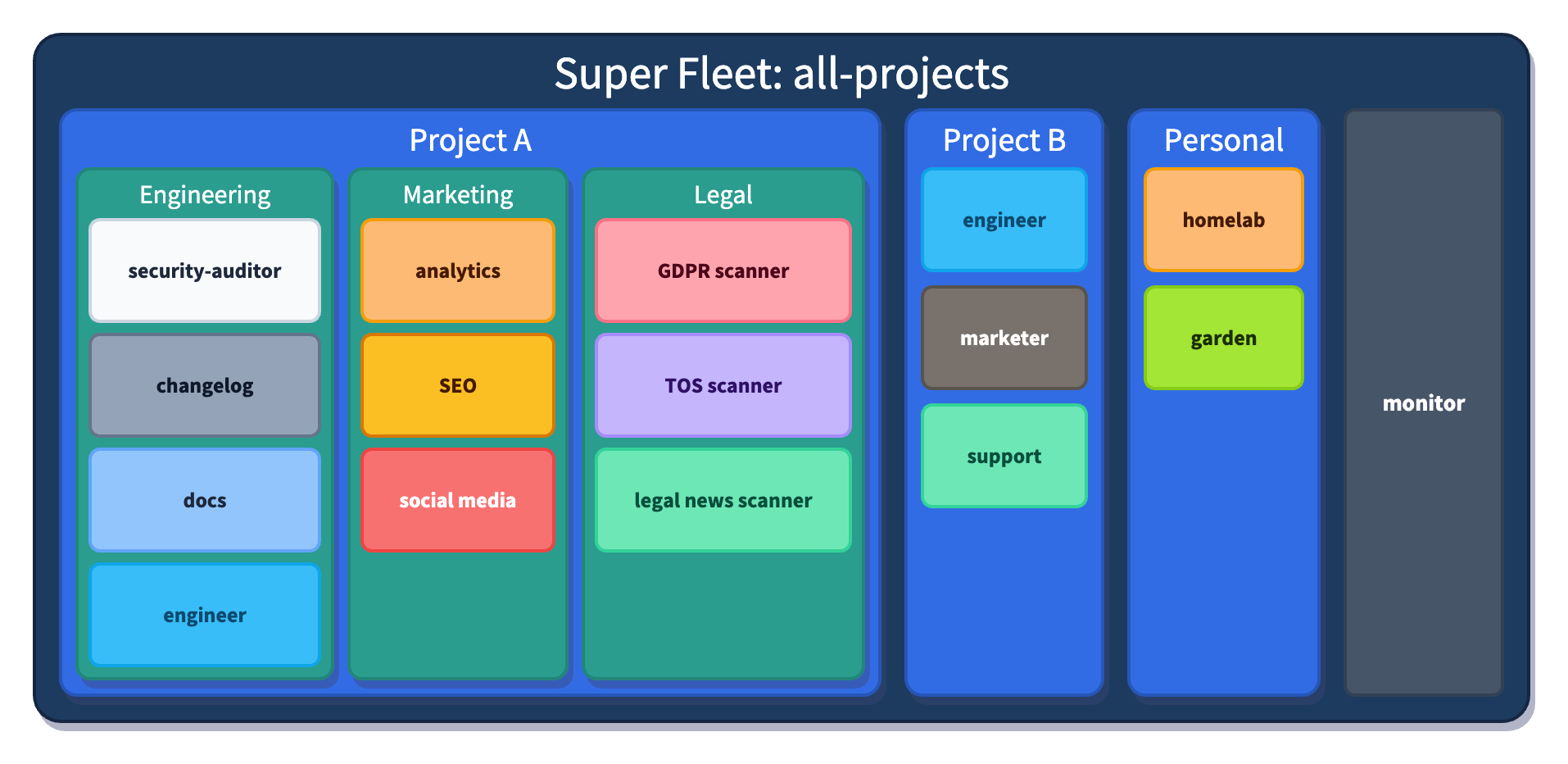
herdctl: Composable Fleets of Claude Agents
I justed added support for Composable Fleets to herdctl. As I build herdctl into more projects, I increasingly find myself creating a fleet of agents per project, and wanted a way …
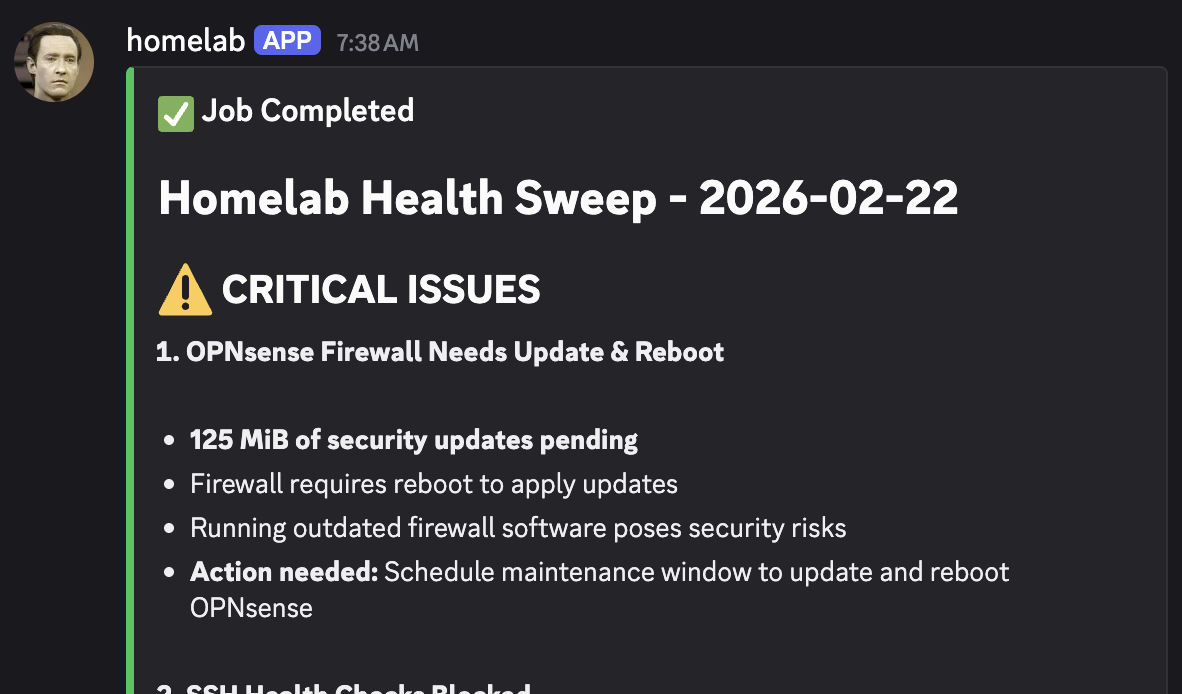
Continuous Security Auditing with herdctl
One of the most valuable unlocks with herdctl for me has been having a bunch of agentic things that just happen every day, without me having to intervene. herdctl itself already us…
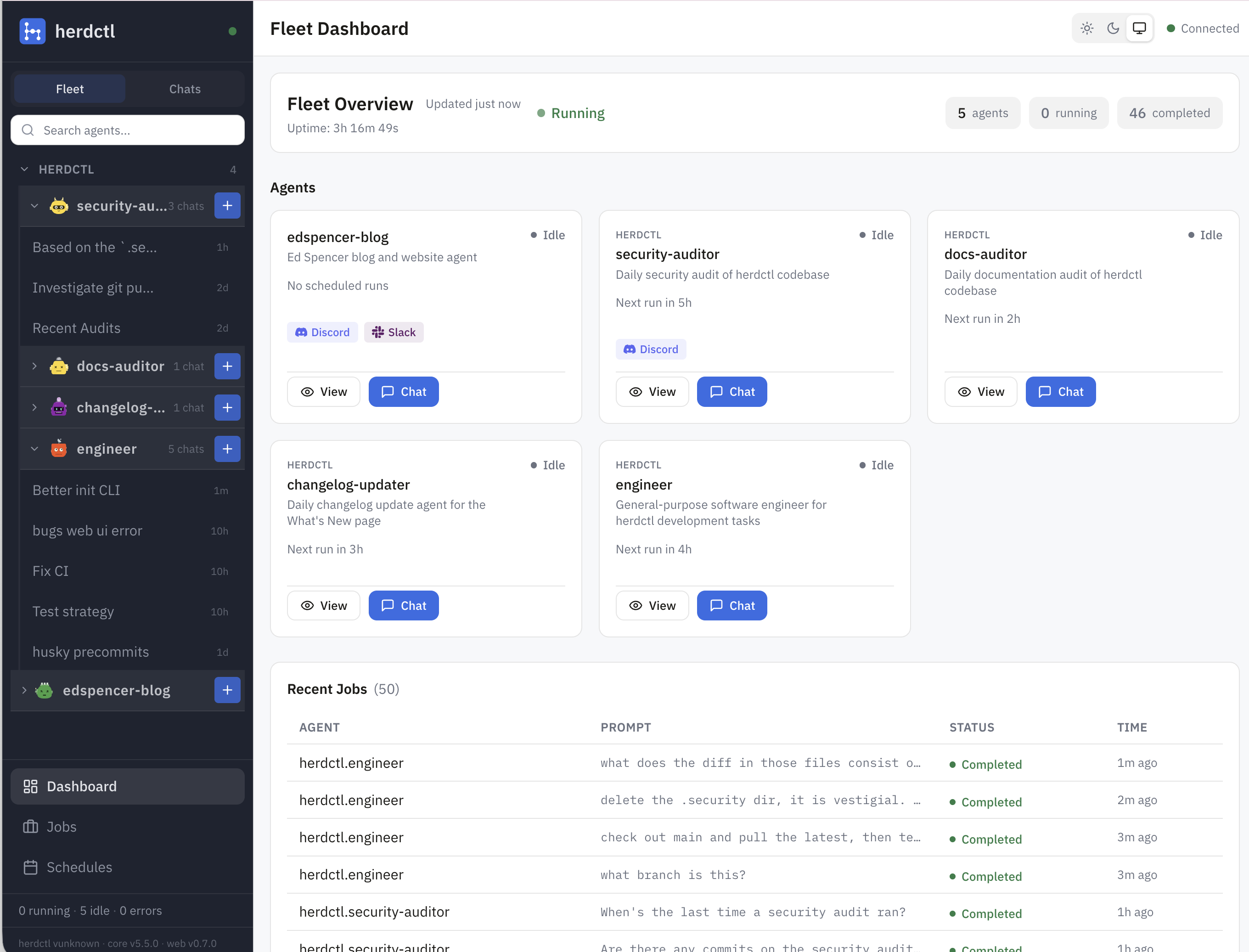
Herdctl Gains Slack and Web Connectors
This week herdctl gained support for Slack and Web connectors, opening up two new ways to interact with your Claude Code agents, running on whatever machine you like.…
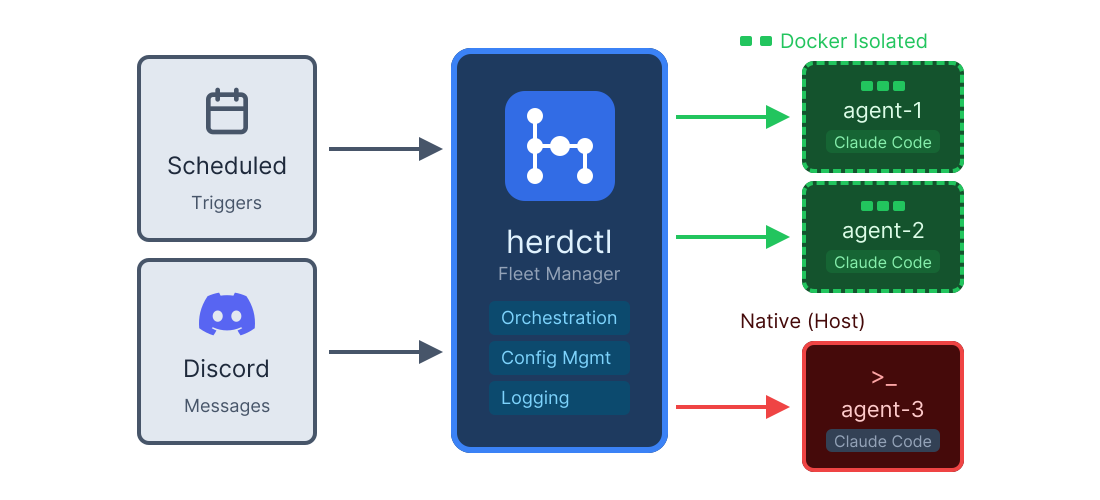
Run Claude Code Agents in Docker with herdctl
herdctl can now run Claude Code Agents in Docker containers, significantly expanding your options for running powerful local agents that do not have full access to your system - wh…
herdctl: an orchestration layer for Claude Code
I love Claude Code, but there are three things I really wish it could do:…
Ready to build your agent fleet?
Get started in under 5 minutes. Open source, free forever.
* The Claude Agents SDK does not officially support using your Claude Max account, but as of the time of
writing it was nevertheless possible to set a CLAUDE_CODE_OAUTH_TOKEN environment variable and have the Agents SDK use your Max account. Long may it last.